Supreme Court Rules 4-2 in Favor of Synthecore to Set Precedent for AI Regulation
- spmedia7
- Feb 21
- 2 min read
By Celia Aizer
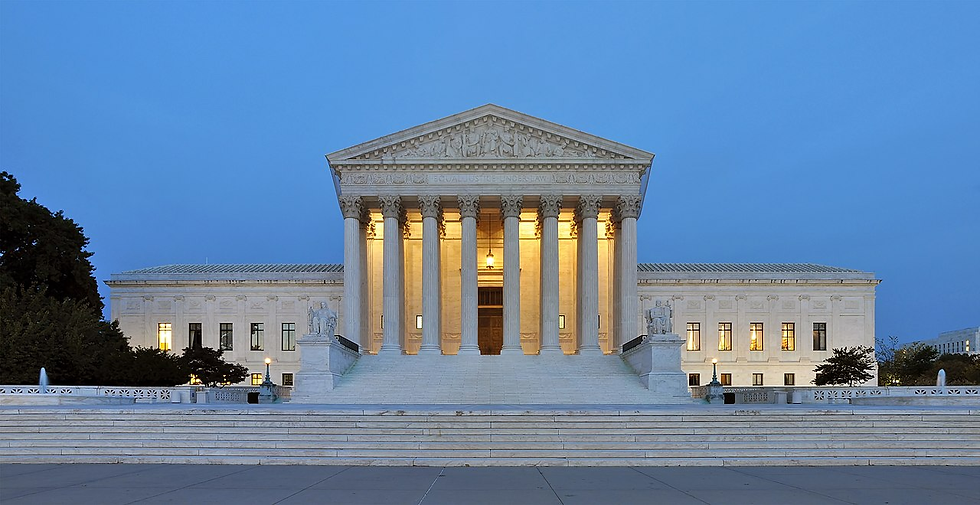
Today Synthecore secured a decisive legal victory, winning its Supreme Court case in a 4–2 ruling that limits how far regulators can stretch existing law to police emerging technologies.
In March 2023, the city of Denver entered a public-private partnership with Synthecore Inc. — a biometric surveillance company — to install a citywide facial recognition system throughout its public transit network. Cameras placed in subway stations, buses, and platforms collected real-time facial scans of all commuters. The data was stored in a centralized database accessible to both Synthecore and local law enforcement. City officials said the program would enhance public safety by using predictive analytics and anomaly detection to flag potential threats. The system was implemented without a public hearing or commuter consent.
In September 2024, civil rights activist and daily transit rider Sasha Miller began investigating the program after noticing increased police presence at stations she frequented. Through a Colorado Open Records Act request, she discovered that her own biometric profile had been accessed 137 times over a four-month period in 2024. Miller had no criminal record, was not under investigation, and had never been notified that her data was being monitored.
Miller sued Synthecore in federal court in December 2024, arguing that the warrantless collection and use of her biometric data violated the Fourth Amendment. She further claimed that Synthecore acted as a state actor under the Fourteenth Amendment and infringed her right to informational privacy. Synthecore countered that individuals have no reasonable expectation of privacy in public spaces and that its automated system did not constitute a constitutional search. The district court ruled for Synthecore in March 2025. After Miller appealed, though, the Supreme Court granted certiorari in October 2025, setting the stage for a landmark ruling on government surveillance and digital privacy.
The main argument brought forward by the respondents, Ming Nelson and Isabella Berger, was that “the data collected was not viewed by human beings, it was read by computers. This falls outside of the scope of the Fourth Amendment.” The appellants argued that as technology is expanding, our laws need to progress with them to protect the American people. Both the respondents and the appellants agreed that “this sets a precedent for new technologies and what can be built. This is about the safety of the American people.”
In its 4–2 decision, the Supreme Court of the United States ultimately sided with Synthecore, holding that the automated collection and computer-based analysis of biometric data in public transit spaces did not constitute a Fourth Amendment search. The majority accepted the respondents’ argument that data processed exclusively by algorithms, without direct human review, falls outside traditional constitutional protections against unreasonable searches. The ruling signals that existing constitutional doctrine may not automatically extend to emerging, AI-driven technologies. At the same time, the sharp division on the Court underscores the growing tension between technological innovation and evolving privacy expectations, leaving open a larger national debate over whether new legislation will be needed to address the expanding reach of digital surveillance.




Comments